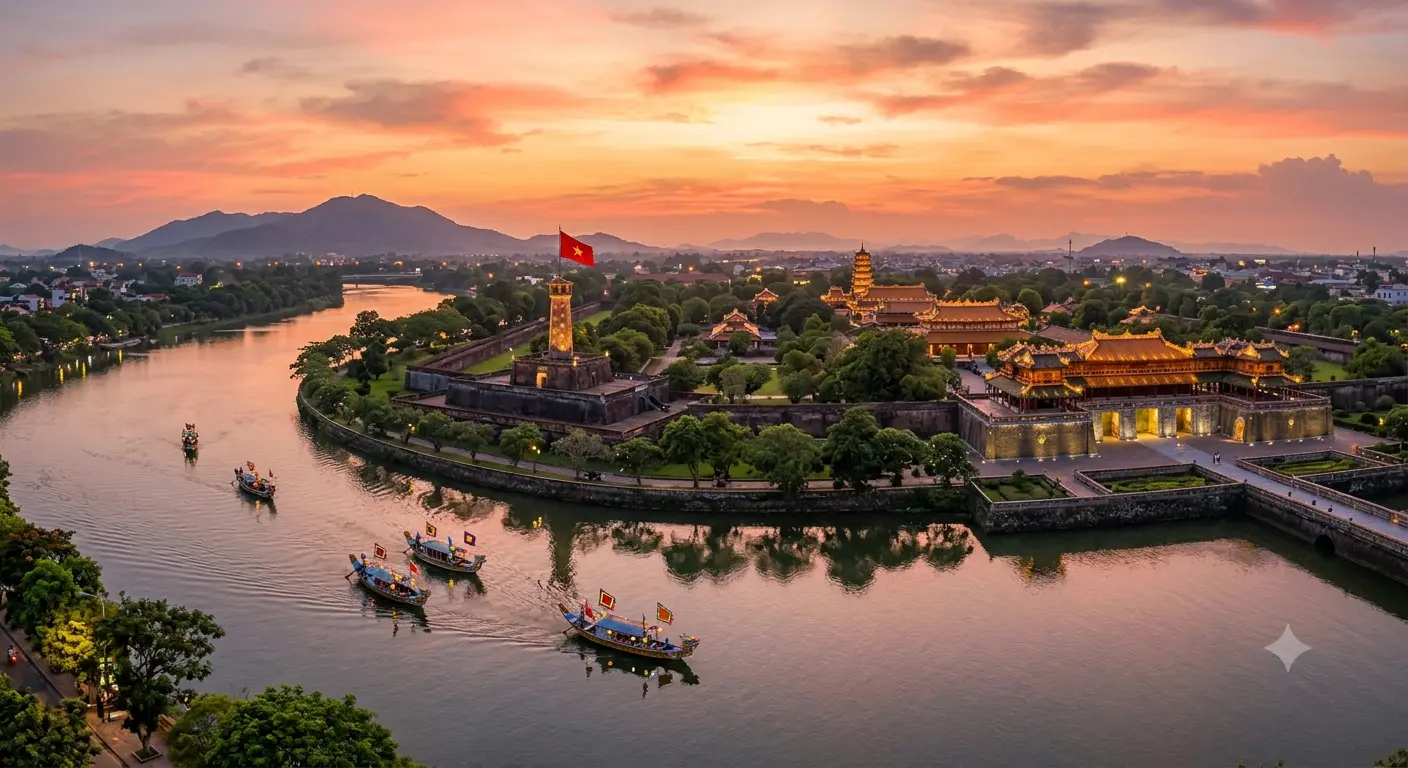
Hue is one of Vietnam’s most important historical and cultural destinations. Located in central Vietnam along the Perfume River, the city was the imperial capital of the Nguyen Dynasty and remains known for its citadel, royal tombs, pagodas, palaces, and traditional cultural practices.
Travelers visit Hue to understand a different side of Vietnam’s history. Its attractions are not limited to one monument: the city’s heritage includes royal architecture, religious sites, river landscapes, ceremonial traditions, and historic buildings spread across the former imperial center.
Why Hue Is Important to Vietnam’s History
Hue served as Vietnam’s imperial capital during the Nguyen Dynasty. Royal courts, government offices, religious institutions, and ceremonial buildings were concentrated in and around the city, giving Hue a central role in the country’s political and cultural development.
The city’s historical importance can be seen in its palaces, gates, temples, royal tombs, and traditional arts. Although Hue has developed into a modern city, many of its most important historic areas remain connected to the imperial period.
For travelers interested in Vietnamese history, Hue offers a more concentrated heritage experience than many other destinations. It is also a useful stop between northern and southern Vietnam.
Hue Imperial City and Imperial Citadel
Key Facts About the Imperial Complex
The Imperial City is a walled royal area within the wider Imperial Citadel. It contains gates, courtyards, temples, palaces, gardens, and ceremonial spaces associated with the Nguyen Dynasty.
Within the complex was the Forbidden Purple City, a more restricted area connected with the emperor and the royal household. Visitors can see surviving structures, restored buildings, open courtyards, and architectural remains that help explain how the imperial court was organized.
The complex is one of the essential Hue historical sites and should be given enough time rather than treated as a brief photo stop.
Major Historical Heritage Sites in Hue
Hue Imperial City
The former royal center is the most important historical attraction in the city. Its walls, gates, palaces, and ceremonial spaces reveal the structure of imperial Hue.
Thien Mu Pagoda
Located beside the Perfume River, Thien Mu Pagoda is one of Hue’s best-known religious landmarks and an important symbol of the city.
Khai Dinh Tomb
This royal tomb is noted for its detailed decoration and combination of Vietnamese and European-influenced design elements.
Minh Mang Tomb
Set in a landscaped environment, Minh Mang’s tomb reflects the relationship between royal architecture, natural surroundings, and formal design.
Tu Duc Tomb
The complex associated with Emperor Tu Duc includes pavilions, gardens, water features, and spaces connected with the emperor’s life and memorial traditions.
Perfume River
The river is central to Hue’s identity and connects the city’s historic core with pagodas, gardens, and royal tomb areas.
Distances between the Imperial City and royal tombs can make transport planning important. A private car, taxi, organized tour, or local guide may be useful for visiting several sites in one day.
Hue and the Nguyen Dynasty
The Nguyen Dynasty made Hue the center of imperial government and royal life. The city was planned around the citadel, court buildings, religious institutions, and the surrounding landscape.
Royal tombs were designed as more than burial places. Their layouts included gates, courtyards, pavilions, gardens, lakes, and symbolic architectural features. The different complexes reflect the personalities, preferences, and historical periods of the emperors associated with them.
Exploring Hue royal heritage gives travelers a clearer understanding of how architecture, ceremony, landscape, religion, and political authority were connected during the imperial period.
Hue’s UNESCO World Heritage Significance
The Complex of Hue Monuments is recognized internationally for its historical, architectural, and cultural value. The designation covers a group of connected monuments rather than a single building, including the citadel, royal tombs, temples, and other imperial structures.
UNESCO heritage Hue is best understood as a cultural landscape. The relationship between the monuments, the river, surrounding hills, gardens, and planned spaces is an important part of the city’s heritage character.
Conservation is ongoing, and some structures may be under restoration or have limited access. Visitors should follow signs, barriers, and site instructions.
Hue’s Culture, Architecture and Traditions
Hue’s cultural heritage extends beyond monuments. The city is associated with royal music, Buddhist traditions, formal architecture, traditional crafts, local festivals, and food influenced by its former court culture.
- Royal architecture organized around courtyards, gates, symmetry, and ceremonial movement.
- Buddhist influence visible in pagodas, temples, rituals, and religious spaces.
- Traditional royal music and performance traditions connected with the former court.
- Festivals and cultural events that may change by year and location.
- Local dishes with careful presentation and distinctive central Vietnamese flavors.
Best Historical Places to Visit in Hue
First-time visitors can begin with the Imperial City, then choose sites according to available time and interest:
- Spend several hours exploring the Hue Imperial Citadel.
- Visit Thien Mu Pagoda beside the Perfume River.
- Select one or two royal tombs rather than rushing through all of them.
- Include time near the river or consider a river activity where suitable.
- Look beyond the main monuments for gardens, gates, historic neighborhoods, and local religious sites.
Best Time to Explore Hue’s Heritage
The best time to explore Hue depends on weather, crowd levels, and your willingness to walk outdoors. Drier conditions can make visits to the Imperial City and royal tombs more comfortable, while rain may affect riverside activities and longer journeys between sites.
Hue can be hot and humid during some periods, so begin outdoor sightseeing early when possible. Carry water, use sun protection, and check the forecast before planning a full day of heritage visits.
Weather patterns can vary, and restoration or event schedules may change. Confirm current information before your trip.
Travel Tips for Visiting Hue Historical Sites
- Allow enough time for the Imperial City instead of treating it as a quick stop.
- Wear comfortable clothing and footwear for walking across large compounds.
- Dress respectfully at pagodas, temples, tombs, and religious spaces.
- Carry drinking water and protect yourself from sun and rain.
- Check current opening information and access conditions before visiting.
- Consider a knowledgeable local guide if you want deeper historical context.
- Do not climb on monuments or cross barriers in protected areas.
Hue tourism is more rewarding when visitors move slowly and pay attention to the relationship between buildings, gardens, water, and ceremonial spaces.
Vietnam eVisa and Travel to Hue
International travelers should check the visa requirements that apply to their nationality, passport, travel purpose, and intended stay before visiting Hue. Not every traveler follows the same visa route.
Review the latest Vietnam eVisa, Vietnam visa requirements, and Vietnam visa fees before booking your trip. If an electronic visa is required, read the how to apply for Vietnam eVisa guidance and check the issued document carefully before departure.
Visa issuance does not guarantee admission. Travelers must comply with current entry requirements and the conditions printed on their approved visa.
Kommentar hinterlassen
Teilen Sie Ihre Fragen, Feedback oder Erfahrungen.
Noch keine Kommentare
Seien Sie der Erste, der kommentiert.